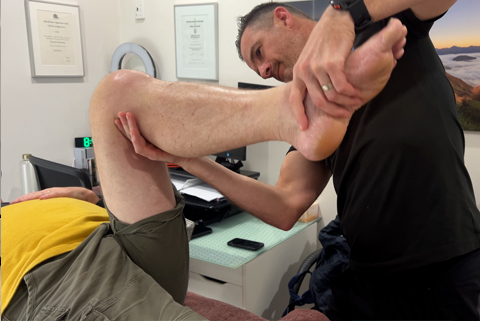
Knee Replacement
What Recovery Really Looks Like
by Tim Keeley10 Oct 2026


As featured in The Daily Telegraph, Herald Sun and other News Corp publications around Australia.
A total knee replacement can be life-changing for people with severe knee arthritis, but recovery does not happen the moment the operation is finished.
The surgery replaces the damaged joint surfaces, but your muscles, movement, walking pattern, balance and confidence still need to recover afterwards.
That is why rehabilitation is such an important part of the process.
One of the biggest questions people ask before surgery is:
“How long will it take before my knee feels normal again?”
The answer is that recovery is gradual. Different milestones happen at different times, and the wound healing is only one part of the overall rehabilitation process.
What Is a Total Knee Replacement?
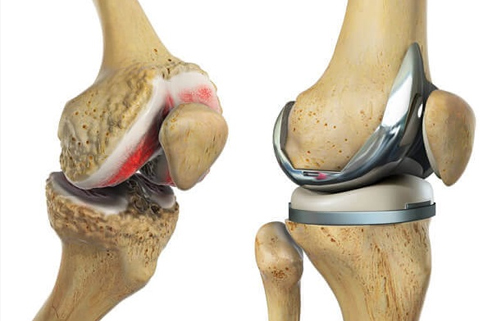
A total knee replacement, also called a total knee arthroplasty, involves replacing the damaged surfaces of the knee joint with artificial components.
It is most commonly performed for advanced osteoarthritis when pain, stiffness and loss of function are significantly affecting daily life and other treatment options are no longer providing enough relief.
The operation addresses the damaged joint surfaces, but it does not instantly restore muscle strength or movement.
Why Is the Knee So Swollen After Surgery?
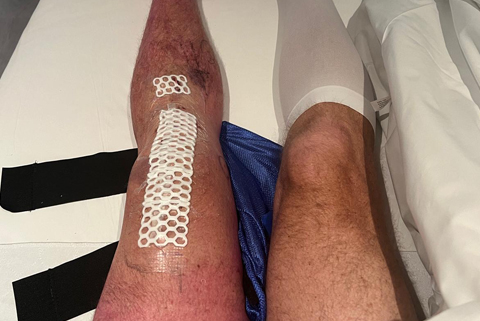
Swelling is a normal part of early recovery after total knee replacement.
The knee has undergone major surgery, so inflammation and swelling are expected.
Swelling can also temporarily reduce quadriceps activation and make the knee feel stiff or heavy.
For many people, swelling can fluctuate for weeks or even months, particularly after increased walking, exercise or time spent on the feet.
The aim is not necessarily to eliminate all swelling immediately, but to manage it while progressively restoring movement and function.
Why Full Knee Extension Matters
One of the most important early goals is restoring the ability to fully straighten the knee.
If the knee remains bent during standing and walking, it can affect gait, increase muscular effort and make the quadriceps work less efficiently.
This is why early rehabilitation often includes exercises and positioning aimed at restoring extension as safely and comfortably as possible.
What About Knee Flexion?
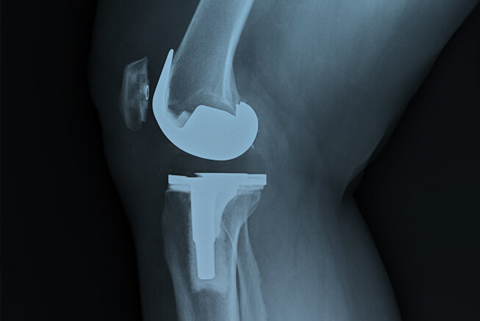
Knee flexion is also important for sitting, stairs, getting in and out of chairs and many everyday activities.
Early after surgery, swelling and pain can make bending difficult.
Flexion should usually be progressed gradually rather than forced aggressively.
The amount of movement required depends on the person's goals and activities, but the key is consistent improvement over time rather than comparing yourself with someone else's recovery.
Why the Quadriceps Become Weak
Quadriceps weakness is extremely common after knee replacement.
Pain, swelling and surgery itself can temporarily reduce the nervous system's ability to fully contract the quadriceps.
This is one reason people may struggle with:
- Straightening the knee
- Getting out of a chair
- Walking normally
- Going up and down stairs
- Controlling the knee during single-leg activity
Rebuilding quadriceps strength is therefore one of the central goals of rehabilitation.
When Should You Be Walking Normally?
Walking usually begins very early after surgery, often with the assistance of a frame, crutches or another walking aid.
The aim is not simply to get rid of the walking aid as quickly as possible.
It is better to walk with a more controlled pattern using an aid than to develop a significant limp simply because you stopped using it too early.
As knee extension, strength and confidence improve, walking aids can be reduced progressively.
What Does Rehabilitation Progress Towards?
Early rehabilitation focuses on basic movement and muscle control, but it should not stay there.
As the knee improves, rehabilitation should progressively challenge the strength and function needed for daily life.
This may include:
- Sit-to-stand exercises
- Squat progressions
- Step-ups
- Step-downs
- Lunges or supported split-squat variations
- Single-leg strengthening
- Calf strengthening
- Balance and functional walking exercises
The exercises should become more challenging as strength and confidence improve.
Why Stairs Can Take Longer to Feel Normal
Stairs require considerably more knee strength and control than level walking.
Going down stairs can be particularly challenging because the quadriceps must control the body as the knee bends under load.
This is why step-downs and other eccentric quadriceps exercises often become important later in rehabilitation.
How Long Does Total Knee Replacement Recovery Take?
There is no single recovery timeline that applies to everyone.
The wound may heal relatively quickly, but restoring strength, movement, walking capacity and confidence takes longer.
Many people make substantial improvements during the first few months, but strength and functional recovery can continue for considerably longer.
Factors that can influence recovery include:
- Strength before surgery
- Range of movement before surgery
- Age and general health
- Pain and swelling
- Consistency with rehabilitation
- Other joint or medical conditions
- The activities the person wants to return to
Why Recovery Is Not Always Linear
One of the most important things to understand is that knee replacement recovery is not always a straight upward line.
You may have a good week, increase your walking or exercises, and then experience more swelling or stiffness for a day or two.
That does not necessarily mean something has gone wrong.
The rehabilitation load simply needs to be adjusted according to how the knee is responding.
When Should You Seek Further Assessment?
You should contact your surgeon or medical team promptly if you develop symptoms such as:
- Increasing redness or heat around the wound
- Wound discharge
- Fever or feeling systemically unwell
- Sudden substantial increase in swelling or pain
- New calf pain or swelling
- Sudden shortness of breath or chest pain
These symptoms can indicate complications that require medical assessment rather than routine rehabilitation.
The Bottom Line
A total knee replacement replaces the damaged joint surfaces, but the operation is only the beginning of the functional recovery process.
Rehabilitation needs to progressively restore knee movement, quadriceps strength, walking ability, stair control and confidence.
The goal is not simply to have a healed surgical wound.
It is to rebuild enough strength and function to return to the activities that matter to you.
A Physiotherapist can help guide this progression and adjust rehabilitation according to how your knee responds at each stage.
About Tim Keeley
Tim Keeley, B.Phty, Cred.MDT, APAM, is the founder and Principal Physiotherapist of Physio Fitness, a sports injury and rehabilitation clinic in Bondi Junction, Sydney.
With more than 27 years of clinical experience and over 20,000 treatments performed, Tim specialises in sports, fitness and post-operative rehabilitation.
He is also the founder of Physio Rehab, an online platform providing structured injury and surgery rehabilitation programs and an extensive Physiotherapy exercise-video library.
Disclaimer: This article provides general information only and is not a substitute for individual medical or Physiotherapy advice. Always follow the post-operative instructions provided by your surgeon and treating Physiotherapist.
👉 Book your consultation today or call us on (02) 9389 9100 for help with your knee replacement rehabilitation.

Principal Physiotherapist